Rinnoji Temple
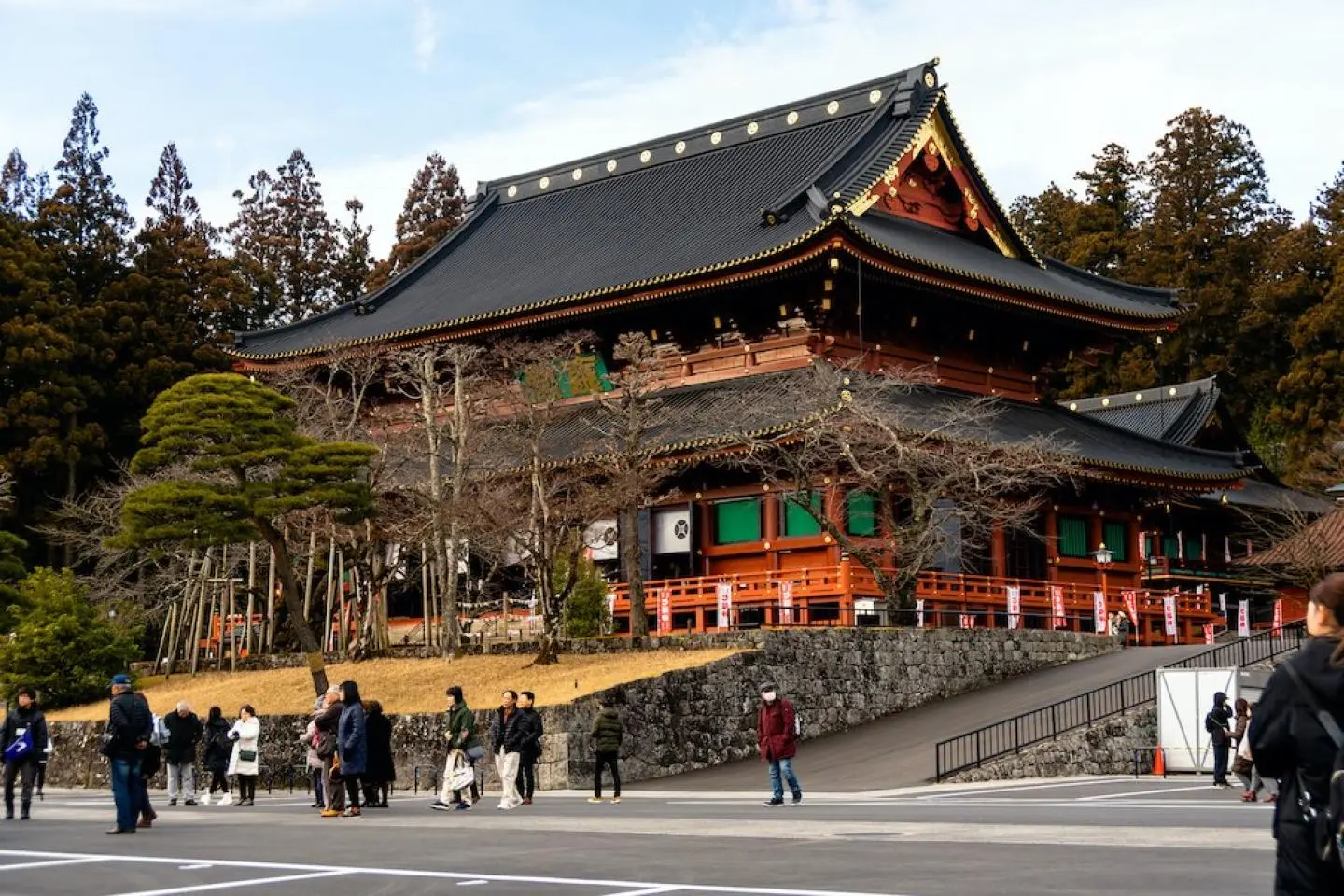
Photo: Phai-Lopb / Shutterstock.com
Notice
The Iemitsu Mausoleum (Taiyuin) may be closed to entry on the following dates: April 18th– 20th, May 17th, July 14th-15th.
Admission: 400 yen (Sanbutsudo only) / 900 yen (Sanbutsudo + Taiyuin) / 300 yen (Treasure House + Shoyo-en)
Overview
/139.6006404,36.7549375,8/360x120?access_token=pk.eyJ1IjoiamFwYW50cmF2ZWxtYXBzIiwiYSI6ImNqbXBtOXYxbDB5Z3ozbHFrazJuYWMwOGYifQ.v15fy_mcFWtgopmz8PhwqA)
Address
2300 Sannai, Nikko, Tochigi 321-1431, JapanHours
8:00 - 17:00 Closed nowOpening Hours
Monday
8:00 - 17:00
Tuesday
8:00 - 17:00
Wednesday
8:00 - 17:00
Thursday
8:00 - 17:00
Friday
8:00 - 17:00
Saturday
8:00 - 17:00
Sunday
8:00 - 17:00
Holidays
8:00 - 17:00
Price
All Rinnoji Temple prices
Phone
+81 288-54-0531
Website
rinnoji.or.jpHighlights
Sanbutsu-do
Rinnoji’s main building, Sanbutsu-do, is a visual marvel with a red exterior, blue-and-green detailing, and traditional design, and is one of the largest wooden structures in Nikko. Inside Sanbutsu-do are three Buddha statues: Amida (Limitless Life/Light), Senju-Kannon (Kannon with a thousand arms), and Bato-Kannon (Kannon with a horse head), which represent mounts Nyoho, Nantai, and Taro respectively—Nikko’s three holy mountains. These gold-lacquered statues stand eight meters tall and are expertly crafted with poised and serene expressions, reminding visitors of the area’s deep respect for the mountains.
Sorin-to Pillar
Standing just outside Sanbutsu-do is a 13-meter tall bronze pillar, which contains thousands of Buddhist sutras to protect the temple. The pillar was built in 1643 at Shogun Tokugawa Iyemitsu’s request.
Homotsu-den (Treasure House)
Near Sanbutsu-do is Homotsu-den, or the treasure house, which displays Buddhist and Tokugawa family artifacts. Visitors can observe numerous pieces of art, such as paintings, sculptures, and scrolls.
Shoyo-en
Behind Homotsu-den, is the stunning Japanese-style garden, Shoyo-en. The overhanging trees, soft green tones, and pond create a mesmerizing scene of tranquility. Stone lanterns decorate the garden in appropriate Edo-period style. On windless days, the water’s stillness provides a reflection of the peaceful scenery. Shoyo-en is especially popular in autumn when the area’s Japanese maple trees turn vibrant red. During this time, the temple illuminates the bright foliage, giving visitors opportunities to experience the garden in the darker tones of the evening and night.
Gohanshiki Ceremony [Apr 2]
Every year on April 2nd, individuals participate in a unique ceremony, called Gohanshiki, which solely takes place at Rinnoji. Also called the Ceremony of Forced Rice Eating, participants are forced to eat large bowls of rice. In return, Buddha will remove the Seven Major Misfortunes from the participants’ and onlookers' lives and bless them with the Seven Major Fortunes. This ceremony dates back to the Edo period, where famous feudal lords would perform the same actions in hopes of Buddha’s blessings.
Có gì độc đáo
- Di sản Thế giới UNESCO
Access
Rinnoji is located about half way between Nikko's Shinkyo Bridge and Toshogu Shrine. It's a 10 min bus ride or 30-40 min walk from Nikko Station (buses are included in the Nikko Pass).
Overview
Address
2300 Sannai, Nikko, Tochigi 321-1431, JapanHours
8:00 - 17:00 Closed nowOpening Hours
Monday
8:00 - 17:00
Tuesday
8:00 - 17:00
Wednesday
8:00 - 17:00
Thursday
8:00 - 17:00
Friday
8:00 - 17:00
Saturday
8:00 - 17:00
Sunday
8:00 - 17:00
Holidays
8:00 - 17:00
Price
All Rinnoji Temple prices
Phone
+81 288-54-0531
Website
rinnoji.or.jpRinnoji Temple