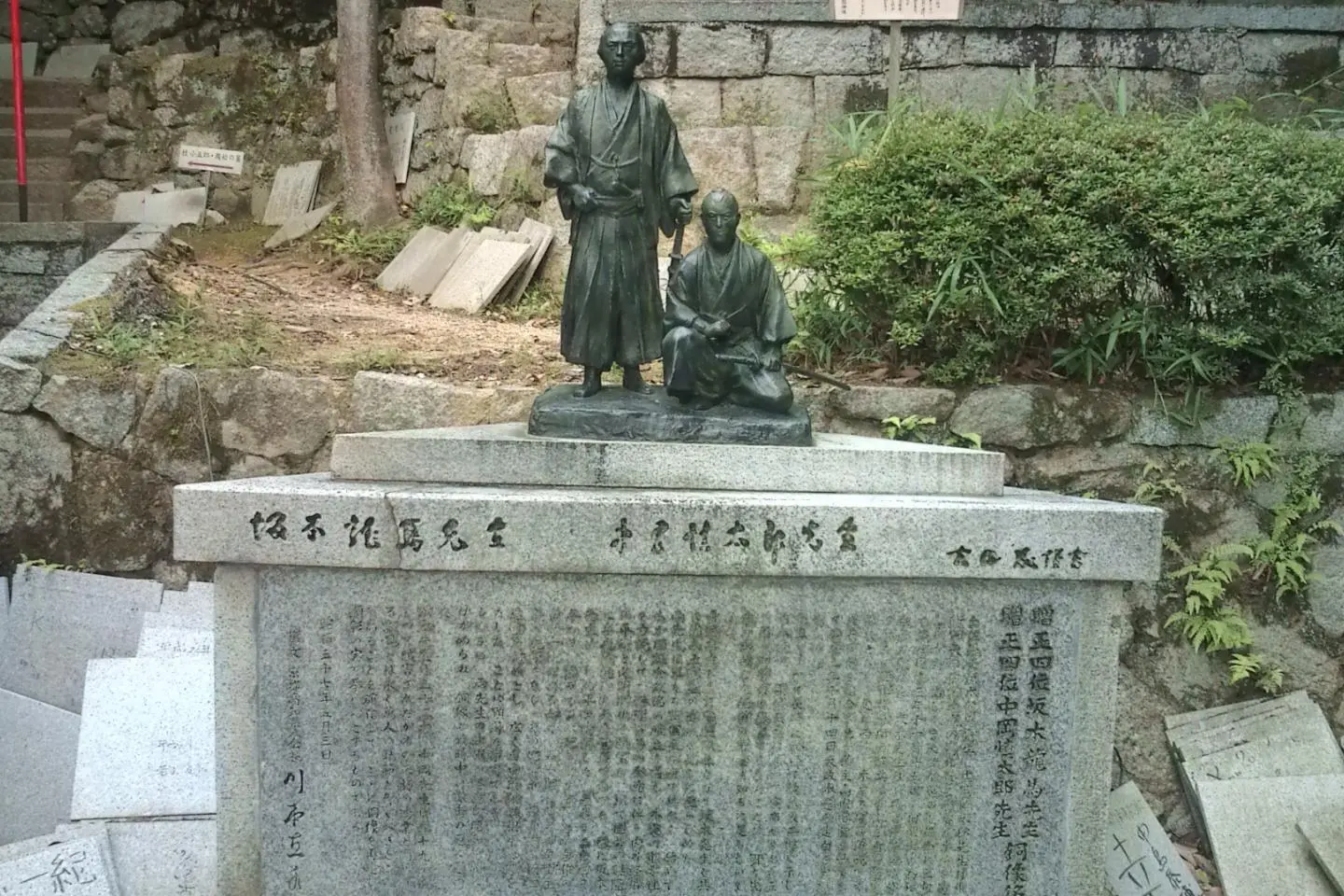
Statues of Ryoma Sakamoto and his best friend and comrade, Shintaro Nakaoka, in Kyoto Ryozen Gokoku Shrine

May 19, 2019 - 2 min read

Tìm kiếm Ryoma 4: Ngôi mộ của Ryoma

Ryoma Sakamoto yên nghỉ trong tay với bằng hữu

Linh Nguyễn Mai

By

Community writer

Ryoma Sakamoto, một trong những anh hùng lịch sử được yêu thích nhất trong lịch sử Nhật Bản, đã bị ám sát ở tuổi 31 tại nhà trọ Ōmiya ở Kyoto vào đêm ngày 10 tháng 12 năm 1867, một tháng trước khi cuộc Duy tân Minh Trị diễn ra. Thật trùng hợp, ông đã bị giết vào ngày sinh nhật của mình. Những kẻ ám sát được cho là từ một nhóm Mạc phủ thân Tokugawa, nhưng những sát thủ thực sự chưa bao giờ được chứng minh. Ryoma được chôn cùng với người bạn thân nhất của mình cũng là người đồng chí cách mạng, Shintaro Nakaoka (người bị ám sát với Ryoma trong đêm) tại nghĩa trang bên trong đền thờ Ryozen Gokoku ở Kyoto. Trong nghĩa trang này, có nhiều samurai đã chết vì ủng hộ cuộc Duy tân Minh Trị (1868), một kỷ nguyên hỗn loạn trong lịch sử Nhật Bản. Để biết thông tin truy cập xin vui lòng tham khảo bài viết khác của tôi, Tìm kiếm Ryoma Sakamoto

Sakamoto Ryoma Series
1. Bãi biển Katsurahama 2. Quán rượu Kyoto Teradaya 3. Ngọn núi Kirishima 4. Ngôi mộ của Ryoma ở Kyoto
5. Công viên tưởng niệm Ryoma ở đảo Kamigoto 6. Sakamoto Ryoma và Yuri Kimimasa
0

Was this article helpful?

Help us improve the site

Statues of Ryoma Sakamoto and his best friend and comrade, Shintaro Nakaoka, in Kyoto Ryozen Gokoku Shrine
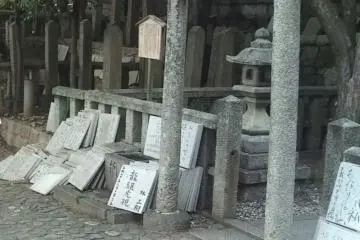
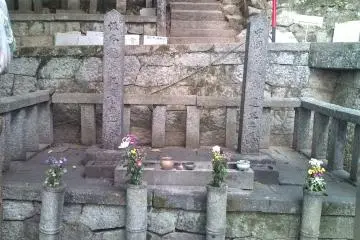
Tomb of Ryoma Sakamoto and his best friend, Shintaro Nakaoka. They were samurai from Tosa (present-day Kochi), tried to reform Japan, and were assassinated together on the night of December 10, 1867, a month before Meiji Restoration took place, at Omiya inn in Kyoto. He was 31 years old
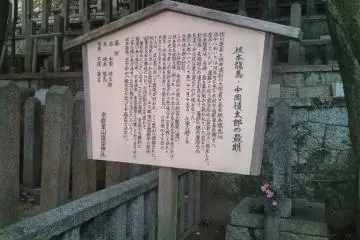
Wooden post explaining the assassination of Ryoma Sakamoto and his friend, Shintaro Nakaoka, two heroes of Japan at the end of Edo period
The gate of Ryoma's graveyard. It looks a little bit desolate
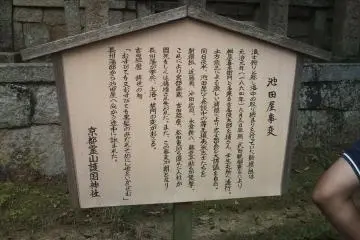
Wooden post explaining the 'Ikedaya Incident' which was an armed encounter between masterless samurai (ronin) formally employed by the Chōshū and Tosa clans (han), and the Shinsengumi, the Tokugawa Shogunate's special police force in Kyoto on July 8, 1864 at the Ikedaya Inn in Kyoto. Many revolutionary samurai who died for the Meiji Restoration are buried in this cemetery
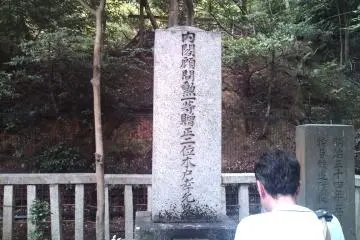
Tomb stone of Kogoro Katsura(later Takayoshi Kido) in this cemetary. His tomb stone is much bigger and dignified than Ryoma's, since he survived the revolution and became a statesman of Meiji government.
+2

Thông tin

Static map of (34.999502419901, 135.78347942223)

京都市東山区清閑寺霊山町1 (Map) (Directions)

Nổi bật

Giới thiệu
Phổ biến